Posted by: jakinnan | December 6, 2012

The Honor of Suffering

Foggy Forest

Your suffering is neither pointless nor isolated. Somehow, Jesus’ sufferings overflow into our lives; somehow ours are linked to his. This is a great honor. It grants our sorrows an incredible dignity; it invites us to know an intimacy and connection with Jesus in them, because of them. The sufferings of Jesus are the noblest part of his life story; the cross, the crown of thorns. What an unspeakable honor that he would share even this with us. This fellowship is a treasure we have not tapped into but one we will need.

When his suffering overflows into our lives, God’s promise is that his comfort will overflow to us as well. We can cry out for the comfort of God. Whatever your circumstances may be, he will heal your wounded heart; he will comfort. Cling to him. “My soul clings to you; your right hand upholds me” (Ps. 63:8). He is with you now. For his name is Faithful and True.

-John Eldredge, Beautiful Outlaw, 243-244

Posted by: jakinnan | December 6, 2012

12/06/2012 Scripture

Little Island

Dear brothers and sisters, when troubles come your way, consider it an opportunity for great joy. For you know that when your faith is tested, your endurance has a chance to grow. So let it grow, for when your endurance is fully developed, you will be perfect and complete, needing nothing.

-James 1:2-4 NLT

Posted by: jakinnan | December 5, 2012

Chicken & Apple Soup

soup-recipe

Description

Warming and hearty soup.

Ingredients

1 c instant rice
1⁄3 c chopped dried apples
1⁄4 c chopped sun-dried tomatoes (not oil packed)
1 T dried onion
4 t chicken boullion (lower sodium or regular)
2 t mild curry powder
2 t dried parsley
1 t granuated garlic
7 oz pouch chicken breast
4 c water

Notes

This soup is an easy last minute recipe – everything you need can be found at most grocery stores. Find the tomatoes hidden in the produce department (look up high), apples with the dried fruit and onions in the spice section. It can also be made vegetarian by leaving out the chicken and using vegetable broth, just double the tomatoes and apples!

Instructions

At home:
Pack the dry items into a sandwich bag, tuck with the chicken.

In camp:
Add the dry ingredients, chicken (with any broth) and 4 cups water to a large pot (2 Liter works well) and bring to a full boil. Take off the heat, cover tightly and let sit for 10 minutes. In cooler weather or at high altitude wrap your pot in a pot cozy.

Serves 2 large or 3 medium servings

Posted by: jakinnan | December 5, 2012

Winter Hiking Survival Guide – Part Five – Camp

tent camping in winter

Humans weren’t built to sleep on snow. Defy nature and sleep soundly with these winter camping tips.

Winterize Your Campsite
Follow these steps to create a comfortable overnight spot.
>> Look up. “Make sure there are no widowmakers nearby,” says Ben Shillington, author of Winter Backpacking and an expedition guide based in Ontario, Canada. “Frozen, brittle sap makes dead trees more prone to breaking and falling.”
>> Stomp out a level tent platform with your snowshoes. Give it at least an hour to sinter (refreeze and set solid), and keep your snowshoes on that entire time so you don’t create an uncomfortable posthole where the tent will be, says Shillington.
>> Pack down a potty trail. It should lead to a sheltered area 150 to 200 yards away from the tent and cooking zones, and away from water sources and main trails.
>> Pitch your tent. “Use your snowshoes, shovel parts, or skis like you’d use deadmen, tying your guylines around them. They’re secure, and you won’t have to pack stakes,” Shillington says. Also, face the front door downhill and away from prevailing winds.
>> Use a single door. Plan to cook and organize gear in one of your tent’s vestibules, and use the other side to climb in and out, which will minimize tracked-in snow.
>> Build snow walls around the tent to block wind. The most wind-protected area will be away from the barrier a distance equivalent to five times the wall’s height.
>> Enjoy and explore. After dinner, take a night hike. “The stars are amazing—plus, if you go to bed warm from the exercise, you’ll sleep better,” says Shillington.

Build a Heat Bomb
“Fill a bottle with hot water before bed and put it in the foot of your sleeping bag so it will be cozy when you crawl in. Around camp, you can also tuck one into your jacket; it’ll stay warm for several hours.”
–K. Cordes

Go to Bed on Empty
“Try to pee a lot before settling in for the night. Having a full bladder makes your body work harder to stay warm, so you feel colder. The extra trips will also reassure you that you’re staying hydrated. In case I do have to go at night, I keep a pee bottle—tightly sealed!—in the tent so I don’t have to go outside.”
–Shannon Davis, Climbing Editor

Sleep Soundly
“A good night’s sleep gives you the best chance for success the next day,” Shillington says. Follow these secrets for peaceful slumber.
>> Manage moisture. Double-check the tightness of your tent’s guylines and batten them down. “A taut pitch prevents the fly from touching the tent’s inner canopy, keeping the interior well-ventilated and dry,” he says. Also, shake snow off your clothes and shoes before climbing in, sweep out any piles of powder, and crack the door (near the tent’s base) and a vent in the tent’s canopy to prevent condensation.
>> Insulate against the cold ground. Put your inflatable pad down first, then place a closed-cell foam pad on top of it. “The latter seals you off from both the frozen ground and the cold air inside the air-filled one,” Shillington says.
>> Loft your bag. At least one hour before going to bed, unpack your sack, lay it down, and shake it out (for example, by flicking it back and forth in a wave motion) to loosen the down.
>> Strip down. Opt for lightweight baselayers and a hat. Your body heat will warm the bag, and you won’t sweat.
>> Stoke your internal furnace. Consume a high-fat snack before going to bed. “I like a mug of hot cocoa with a blob of butter stirred into it,” Shillington says.

Clear Fresh Snow
“Snow buildup can collapse a tent and block vents. Thwacking the canopy from the inside can clear a light dusting, but in heavier snow you’ll have to go outside. Use your arm to sweep snow off the fly; don’t use your shovel, which may tear the fabric.”
Nat Patridge, president of Exum Mountain Guides

Cuddle Up
“My most valuable piece of cold-weather gear is my wife. I never sleep better or warmer than when we zip our sleeping bags together for the night.”
Jonathan Dorn, BACKPACKER Editor-in-Chief

Dry the Dog
“If you bring the dog inside your tent, let him roll in snow first—the dry flakes absorb water. Also, wiggle him into a coat to help him stay warm.”
Jen Raffaeli, Denali National Park kennel manager

Courtesy of Backpacker magazine

Posted by: jakinnan | December 5, 2012

The Unnatural Manner

Bears

“Plants or animals rarely behave in an unnatural manner that’s contrary to their true makeup. Human beings are also natural beings, but at the same time, we’re conscious entities. We therefore have free will and must make the choice not merely to be part of nature, but also to follow faithfully the “laws of nature.”

-H.E. Davey

Posted by: jakinnan | December 5, 2012

Every Story Has a Villain

wolf-mountain-overlook

Why does every story have a villain?

It’s hard to think of a tale without one. As children, we learned to fear the Big Bad Wolf and the Troll under the bridge. As we grew older, we discovered more serious villains in the Star Wars series-Darth Vader and Darth Maul and Darth Sidious. The Wicked Witch of the West hunted Dorothy. Wallace fought against Longshanks, and Maximus went hand to hand against Commodus. The trinity in The Last of the Mohicans had to eventually face Magua, the black-hearted Huron who betrayed them all.

In The Fellowship of the Ring, we come to dread the Dark Lord Sauron, the Orcs that do his bidding, and the Black Riders who hunt poor Frodo and the ring that will give the evil one power to enslave the world.

Every story has a villain because yours does.

Though most of you do not live like it.

Most people do not live as though the Story has a Villain, and that makes life very confusing. How have we missed this? All the stories we’ve been telling about the presence of an evil power in the world, all the dark characters that have sent chills down our spines and given us restless nights-they are spoken to us as warnings.

There is evil cast around us.

War. Famine. Betrayal. Murder. Surely we know there is an evil force in this world.

-John Eldredge, Epic, 28, 29

Posted by: jakinnan | December 5, 2012

12/05/2012 Scripture

cloudy mtn

If we claim we have no sin, we are only fooling ourselves and not living in the truth.  But if we confess our sins to him, he is faithful and just to forgive us our sins and to cleanse us from all wickedness. If we claim we have not sinned, we are calling God a liar and showing that his word has no place in our hearts.

-1 John 8-10 NLT

Posted by: jakinnan | December 4, 2012

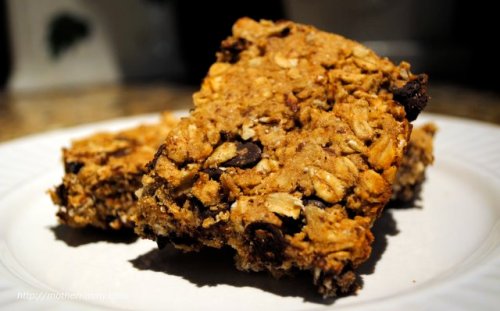
Stevia Sweetened Energy Bars

energy bars

Description

Lower Glycemic trail bars.

Ingredients

1 1⁄2 c whole rolled oats
1 c whole wheat pastry flour
3⁄4 c slivered almonds
3⁄4 c dried fruit
1 c dried coconut
1⁄2 t salt
1 t ground cinnamon
2 T stevia (equivalent to 1 cup sugar)
4 T butter, softened
2 egg whites
3⁄4 c almond butter
1 t pure vanilla extract
1 c raw amaranth, cooked and cooled (see below)

Notes: You can find Stevia in Trader Joe’s as well and is very affordable that way!
For the dried fruit, Dogpatch used golden raisins but according to them dried apricots are lower in sugar. Use what you like as usual.
Amaranth can be found in natural grocery stores.

Instructions

Note: Cook amaranth in 2 cups water for 20 to 25 minutes, stirring occasionally towards the end to prevent sticking. Let cool and then proceed.

Preheat oven to 350*. Oil lightly or spray with cooking spray a 9×13 or 10×15 pan and then line with parchment paper.

Mix dry ingredients together. Mix wet ingredients separately. Add wet to dry and mix. Press mixture evenly into baking pan, making sure to pack it tightly. Use a spatula dipped in water for this.

Bake 25 to 30 minutes or until edges are golden.

If your pan is a low, jelly-roll type pan, you can invert it fairly soon after removing from oven. If it’s a deeper pan, you’ll want to wait until it’s cooled completely, to avoid breakage.

~With homemade items try to eat your product within 3-4 days of baking it. Most homemade items can be frozen safely in advance (cut into individual portions, wrap, and store in large freezer bags.). Most frozen items are good for 1-2 months in a freezer.

Courtesy of trailcooking.com

Posted by: jakinnan | December 4, 2012

The Moon is Howling

Moon

“And then there are the times when the wolves are silent and the moon is howling.”

-George Carlin

Posted by: jakinnan | December 4, 2012

Winter Hiking Survival Guide – Part Four – Cook

alaska-landscapes-210

In and out of the wilderness, food is important for survival. Don’t screw it up with these winter cooking tips.

Melt Snow Like a Pro
It takes as much as 10 cups of powder to create a cup of liquid—and you’ll need more than a gallon of water per person per day. Jeff Ward, co-owner of North Cascades Mountain Guides, has 10 tips for melting the white stuff.
1. Gather dense snow. It has higher water content than powder.
2. Bring a large compactor bag. Use it to haul and store clean snow you collect away from busy (and dirty) camp areas.
3. Use a large pot. Heating one big pot is more efficient than heating two smaller ones. Keep the lid on as much as possible.
4. Fire up two stoves. Pair them under one pot for faster melting.
5. Put an inch of water in your pot before adding powder. Heated metal (without the water) will scorch dust and debris in the snow, making the water taste burnt (and ruining your pot).
6. Add snow slowly. Airspace between flakes is insulating, so stuffing the pot lowers the air temperature and slows melting.
7. Cook out of the wind. “A small breeze can reduce stove efficiency dramatically,” says Ward. With a hanging stove, cook inside a well-ventilated tent. With standard stoves, cook in your vestibule or set up a protected cooking area.
8. Use a stove platform. Prevent your stove from sinking as it heats nearby snow: Place stove legs on a square of plywood, aluminum-wrapped foam, “or a shovel blade if you’re in a pinch,” Ward says.
9. Bring a collapsible container to store extra water.
10. Carry extra fuel. If you’re melting snow, you’ll need at least eight ounces of white gas per person per day—though you may need more in subfreezing temps, if you have an inefficient stove, if it’s extra windy, or you’re cooking extravagant meals.

Start a Meal from Your Sleeping Bag
“Before going to sleep at night, gather your breakfast and coffee-making supplies and stash them in your vestibule in a stuffsack so snow doesn’t cover them. If you’re using a canister stove, detach the fuel and keep it in your bag overnight. In the morning, you can get breakfast going without getting out of bed.”
Dennis Lewon, BACKPACKER Editor

Keep Fingers Functional
Cold-weather climber Matt Samet, author of The Climbing Dictionary (climbingterms.com), has this advice on keeping your fingers nimble sans gloves.
>> “Tape hand warmers to the inside of wristbands or forearm sleeves. They’ll heat blood inbound to your hands, which in turn will warm your fingers,” says Samet.
>> Repeatedly exhale hard into your closed hand or put your palm on your neck or belly (or jam it into your armpit).
>> Windmill your arms. The centrifugal force drives blood from your core to your extremities.
>> Thwack your inactive hand lightly against your leg, which will jolt your nerves and help rekindle sensation. Then open and close your hand rapidly, flicking your fingers “until you feel the pain of blood rushing back into the capillaries,” Samet says.

Collect Water, Save Fuel
“On a warm, sunny day, snow at the bottom of a snowfield will be wet with percolating water and may melt into a drinkable slush. Collect it to heat at camp. Or make a poor-man’s Slurpee: Add drink powder and suck with a straw.”
Blake Herrington, North Cascades alpinist

Graze to Blaze
“I’ve made the mistake of eating a big breakfast, and then having to slow down because I’m digesting. In winter, eat a small breakfast, then make little meals of gels, bars, and dried fruit or nuts throughout the morning. Your main breakfast priority: drinking. I down almost a quart of water or tea before setting off.”
Rolando Garibotti, speed alpinist and mountaineering guide

Stay Hydrated
“High-calorie drinks can be your best friend. Bring a small stainless thermos filled with Lemon Zinger tea, a scoop of Gatorade powder, and honey. Take a sip of this mix at least once every half hour or so.”
Mike Alkaitis, Colorado Mountain School manager

Courtesy of Backpacker magazine

« Newer Posts - Older Posts »

Categories