Posted by: jakinnan | November 7, 2013

Journey or Homestead?

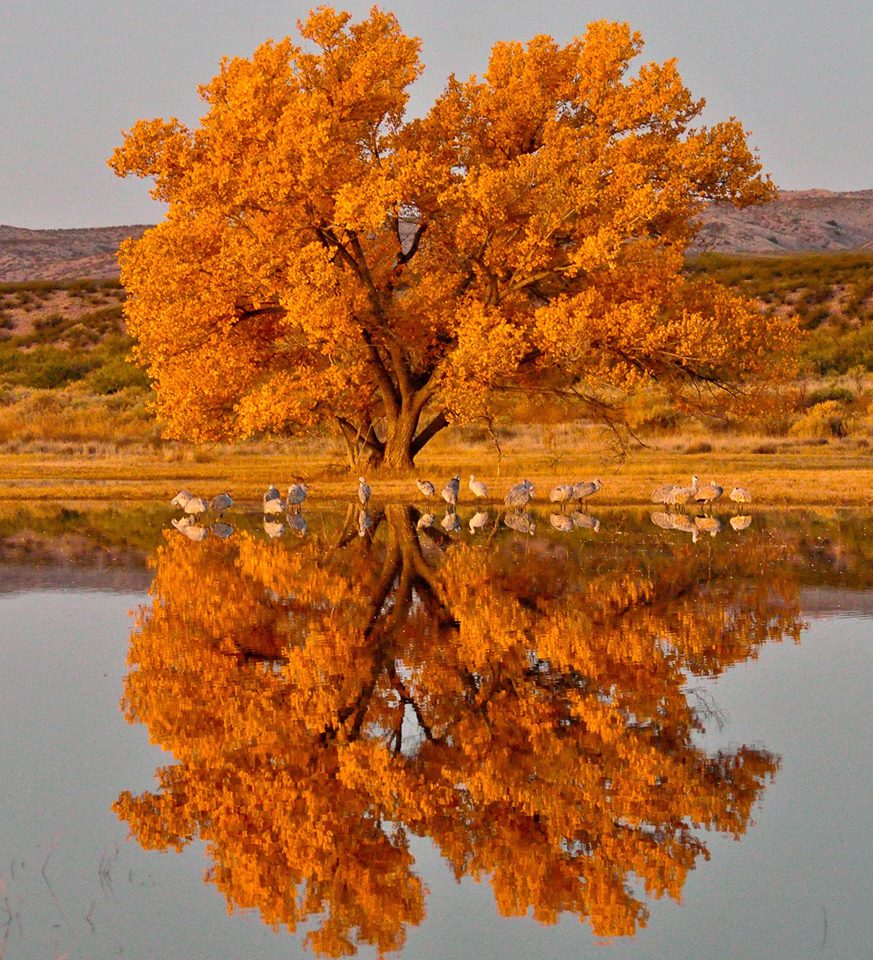
Coyote Arch

Every great story involves a quest. In J. R. R. Tolkien’s The Hobbit, Bilbo Baggins ran from the door at a quarter till eleven without even so much as a pocket handkerchief and launched on an adventure that would change his life forever. Alice stepped through the looking glass into Wonderland; Lucy, Edmund, Susan, and Peter stumbled through the wardrobe into Narnia. Abraham left his country, his people, and his father’s household to follow the most outlandish sort of promise from a God he’d only just met, and he never came back. Jacob and his sons went to Egypt for some groceries and four hundred years later the Israel nation pulled up stakes and headed for home. Peter, Andrew, James, and John all turned on a dime one day to follow the Master, their fishing nets heaped in wet piles behind them. The Sacred Romance involves for every soul a journey of heroic proportions. And while it may require for some a change of geography, for every soul it means a journey of the heart.

The choice before us now is to journey or to homestead, to live like Abraham, the friend of God, or like Robinson Crusoe, the lost soul cobbling together some sort of existence with whatever he can salvage from the wreckage of the world. Crusoe was no pilgrim; he was a survivor, hunkered down for the duration. He lived in a very, very small world where he was the lead character and all else found its focus in him. Of course, to be fair, Crusoe was stranded on an island with little hope of rescue. We have been rescued, but still the choice is ours to stay in our small stories, clutching our household gods and false lovers, or to run in search of life.

– John Eldredge, The Sacred Romance

Photo: Jess Clark
Posted by: jakinnan | November 7, 2013

11/07/2013 Scripture

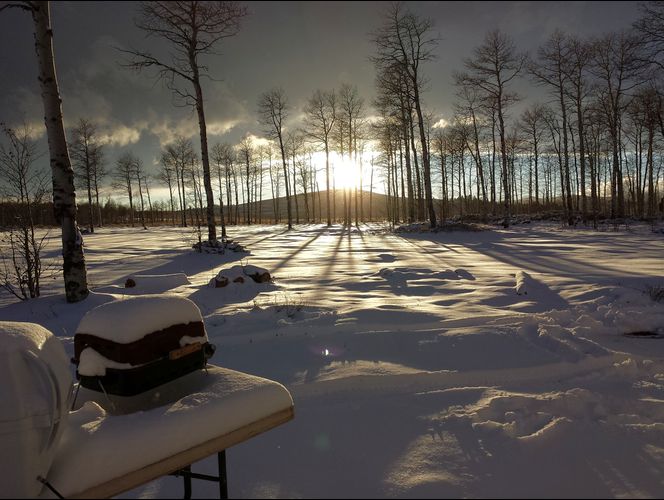
Uintah

Jesus knew that his mission was now finished, and to fulfill Scripture he said, “I am thirsty.” A jar of sour wine was sitting there, so they soaked a sponge in it, put it on a hyssop branch, and held it up to his lips. When Jesus had tasted it, he said, “It is finished!” Then he bowed his head and released his spirit.

-John 19:28-30 NLT

Photo: Scott Carr

Posted by: jakinnan | November 6, 2013

Turning from Attachment to Desire

Oregon

So much of the journey forward involves a letting go of all that once brought us life. We turn away from the familiar abiding places of the heart, the false selves we have lived out, the strengths we have used to make a place for ourselves and all our false loves, and we venture forth in our hearts to trace the steps of the One who said, “Follow me.” In a way, it means that we stop pretending: that life is better than it is, that we are happier than we are, that the false selves we present to the world are really us. We respond to the Haunting, the wooing, the longing for another life. Pilgrim begins his adventure toward redemption with a twofold turning: a turning away from attachment and a turning toward desire. He wanted life and so he stuck his fingers in his ears and ran like a madman (“a fool,” to use Paul’s term) in search of it. The freedom of heart needed to journey comes in the form of detachment. As Gerald May writes in Addiction and Grace,

Detachment is the word used in spiritual traditions to describe freedom ofdesire. Not freedom from desire, but freedom of desire . . . An authentic spiritual understanding of detachment devalues neither desire nor the objects of desire. Instead, it “aims at correcting one’s own anxious grasping in order to free oneself for committed relationship to God.” According to Meister Eckhart, detachment “enkindles the heart, awakens the spirit, stimulates our longings, and shows us where God is.”

With an awakened heart, we turn and face the road ahead, knowing that no one can take the trip for us, nor can anyone plan our way.

– John Eldredge, The Sacred Romance

Photo: BLM-Oregon

Posted by: jakinnan | November 6, 2013

11/06/2013 Scripture

Red Rock

That Sunday evening the disciples were meeting behind locked doors because they were afraid of the Jewish leaders. Suddenly, Jesus was standing there among them! “Peace be with you,” he said. As he spoke, he showed them the wounds in his hands and his side. They were filled with joy when they saw the Lord! Again he said, “Peace be with you. As the Father has sent me, so I am sending you.” Then he breathed on them and said,“Receive the Holy Spirit. If you forgive anyone’s sins, they are forgiven. If you do not forgive them, they are not forgiven.”

-John 20:19-23 NLT

Photo: Kent A. LeFevre

Posted by: jakinnan | November 5, 2013

Seeing from a Different Perspective

Zion

Entering into the Sacred Romance begins with eyes to see and ears to hear. Where would we be today if Eve had looked at the serpent with different eyes, if she had seen at once that the beautiful creature with the charming voice and the reasonable proposition was in fact a fallen angel bent on the annihilation of the human race? Failure to see things as they truly are resulted in unspeakable tragedy. From that point on, the theme of blindness runs throughout Scripture. It’s not merely a matter of failing to recognize temptation when we meet it; like Elisha’s servant, we often fail to see the drama of redemption as well (2 Kings6:15-17).

Needless to say, Elisha’s servant suddenly saw from a whole different perspective. I (John) think it’s safe to assume he also experienced a bit of emotional relief —a recovery of heart. What for him had undoubtedly been a harrowing encounter became an exciting adventure.

The apostle Paul experienced an even greater surprise on the road to Damascus. Thinking he was doing God a favor, he was hell-bent on crushing a tiny religious movement called the Way. But he had the plot and the characters completely confused. Paul, known at that time as Saul, was playing the role of Defender of the Faith, when in fact he was Persecutor of Christ. It took a bout of blindness to bring things into focus, and when the scales fell from his eyes, he never saw things the same way again. Paul later explained to the Romans that human sin and suffering are the result of foolish and darkened hearts, brought on by a refusal to see the Sacred Romance. It should come as no surprise that his most fervent prayer for the saints was that the scales would fall from the eyes of our hearts so that we might not miss the Sacred Romance (Eph. 1:18-19).

– John Eldredge, The Sacred Romance

Photo: Justin Soderquist

Posted by: jakinnan | November 5, 2013

11/05/2013 Scripture

Johnson Lake

Then the disciple Jesus loved said to Peter, “It’s the Lord!” When Simon Peter heard that it was the Lord, he put on his tunic (for he had stripped for work), jumped into the water, and headed to shore. The others stayed with the boat and pulled the loaded net to the shore, for they were only about a hundred yards from shore. When they got there, they found breakfast waiting for them—fish cooking over a charcoal fire, and some bread.

-John 21:7-9 NLT

Photo: Deb Shanahan

Posted by: jakinnan | November 4, 2013

Don’t Take the Bait

Yosemite1

The only way is love. Paul says love “keeps no record of wrongs” (1 Cor. 13:5). In loving relationships, we want to throw away the list in our heads of wrongs done to us and ignore them when they raise their indictments yet again. Too often we keep those lists, ruminate on them, and nurse them like a wounded animal. We say we forgive—and we may even believe we have—but when the list presents itself again we entertain it with a sort of sick satisfaction. “See what they did? Remember what she said?” We have taken the bait of offense. We are inside the trap.

The word used in Scripture for offense actually means “bait,” the bait that is placed inside a trap to lure an animal to its death.

Offenses need to be forgiven quickly, or they will fester and poison the relationship. The poison seeps out and affects our own souls as well. Offenses that are held on to lead to death.

People will hurt us. We will hurt and offend as well. We all will do this with intention and without, with our thoughts bent to wound and with no thought at all. Jesus took all our offenses into his broken body when he died for us, and he took everyone else’s as well. All that he suffered—the beating, the scourging, the mocking, and finally the crucifixion—was more than enough to pay for it all. Our offenses and theirs.

– Stasi Eldredge, Becoming Myself

Photo: National Park Service

Posted by: jakinnan | November 4, 2013

11/04/2013 Scripture

reflection

He replied, “The Father alone has the authority to set those dates and times, and they are not for you to know. But you will receive power when the Holy Spirit comes upon you. And you will be my witnesses, telling people about me everywhere—in Jerusalem, throughout Judea, in Samaria, and to the ends of the earth.”

After saying this, he was taken up into a cloud while they were watching, and they could no longer see him. As they strained to see him rising into heaven, two white-robed men suddenly stood among them. “Men of Galilee,” they said, “why are you standing here staring into heaven? Jesus has been taken from you into heaven, but someday he will return from heaven in the same way you saw him go!”

-Acts 1:7-11 NLT

Photo: Robert Dunn

Posted by: jakinnan | November 3, 2013

11/03/2013 Scripture

rainbow

On the day of Pentecost all the believers were meeting together in one place. Suddenly, there was a sound from heaven like the roaring of a mighty windstorm, and it filled the house where they were sitting. Then, what looked like flames or tongues of fire appeared and settled on each of them. And everyone present was filled with the Holy Spirit and began speaking in other languages,as the Holy Spirit gave them this ability.

-Acts 2:1-4 NLT

Photo: Lee Whittaker

Posted by: jakinnan | November 2, 2013

We Pick Up Jesus

Lonely Road

You probably know what you have been afraid to entrust to God. When we surrender our fear, we are offering it to Jesus. We are saying, “This fear is too much fear for me to bear. I give it to you because I believe you are good and worthy of my trust.” When we actively, by faith, lay down our fears at the feet of Jesus, we pick up his love in return. It is an uneven trade, a heavenly exchange…

Laying down what we want to protect or are afraid of losing or are terrified we will never have is not the same thing as losing those things. It is surrendering them. It is opening up our clenched hand around them and allowing God access to them and to us. It is actually saying yes to God for them. Yes to his plan. Yes to his way. It is believing that just as his ways are higher than the heavens are above the earth, so his way for the things we fear for is higher. This God of ours is a God of life, of goodness. He is the God of the Resurrection. We lay down our fear. We pick up Jesus. He is the only way we can live beyond fear. He is the Way.

– Stasi Eldredge, Becoming Myself

Photo: Sarah Swenson

« Newer Posts - Older Posts »

Categories