Posted by: jakinnan | November 30, 2012

11/30/2012 Scripture

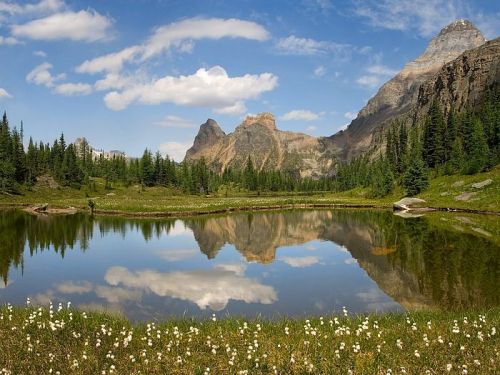
Windows lake

Therefore, we never stop thanking God that when you received his message from us, you didn’t think of our words as mere human ideas. You accepted what we said as the very word of God—which, of course, it is. And this word continues to work in you who believe.

-1 Thessalonians 2:13 NLT


Posted by: jakinnan | November 29, 2012

Can’t Ignite Damp Wood?

Maximize your spark’s potential with a tinder bundle that will burn anywhere.

>> Collect tinder “As you hike, look for pine or cedar bark, both low-temp igniters,” says Reggie Bennett, chief instructor at Mountain Shepherd Wilderness Survival School. “Peel wet bark to access the dry inner layer. Or scrape a wet branch with your knife; there’s usually dry wood within ¹/8-inch of the surface.” Tuck a grapefruit-size bundle into an interior pocket.

>> Gather fuel Collect dead sticks (finger-width and thinner) for kindling from atop undergrowth or from low branches; they’ll be drier than boughs or wood from the ground. Amass a daypack-size supply, and stockpile wrist- and forearm-width logs for fuel.

>> Construct a platform 
Find a wind-protected area out of direct rain. Build a 1-by-1-foot square of green bark, sticks, or nonporous rocks like clay or shale.

>> Light it Fluff your dry tinder into a loose ball, place it on your platform, and light it with a magnesium firestarter, waterproof match, or a lighter. Spark the ball’s center from the upwind side.

>> Feed the flame Slowly surround the tinder in a tee pee shape of kindling. If your fire smokes excessively, blow gently into it. When the flames last five minutes without tending, add larger fuel.

Courtesy of Backpacker magazine

Posted by: jakinnan | November 29, 2012

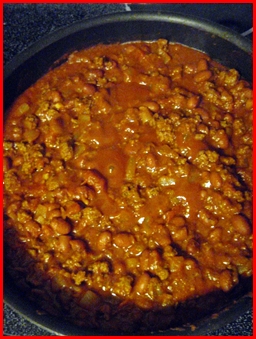
Mary Ruth’s Honeymoon Chili

Ingredients:

  • 1 to 1¼ pounds lean ground beef or turkey
  • ½ cup bread crumbs, finely ground
  • 1 large onion
  • 1 – 2 cloves garlic
  • 3 Tbsp Chili Powder
  • 1 15 oz. can kidney or red beans, drained
  • 1 10 oz. can tomato puree
  • 1 14 oz. can diced tomatoes

In the kitchen:

Work bread crumbs into ground meat with your fingers and set aside for a moment. I add bread crumbs because dehydrated meat infused with bread crumbs rehydrates better on the trail. Also, the bread crumbs absorb and lock in more of the chili flavor. If you are not planning on dehydrating this chili recipe for backpacking, there is no need to add bread crumbs to the meat. You can make your own bread crumbs by dehydrating bread and crushing with the smooth edge of a meat tenderizing mallet.

Sautee onions and garlic in a little olive oil using just enough to coat the pan. It really helps to use a non-stick pan.

Add ground meat and cook for about ten minutes until browned, stirring continuously.

Add chili powder and cook for one more minute.

Add tomato puree, diced tomatoes, and drained beans.

Cook until bubbling and then reduce heat to a simmer for one hour.


Dehydrate:

Have a taste and put the rest in the refrigerator overnight. The extra time enhances the flavor. Hitting the trail in the morning? Start dehydrating immediately.

Spread chili out on dehydrator trays covered with non-stick Paraflexx® Sheets or parchment paper.

Dehydrate at 125° for 8 – 10 hours. This recipe took up three 15 x 15 Excalibur Dehydrator trays. After about four hours in the dehydrator, break up any meat and beans that might be stuck together with a spoon or your fingers to expose pieces to more air circulation.

Once dry, divide dehydrated chili into one cup or larger servings and pack in plastic zip-lock bags.

Yield: Five cups weighing about 12 ounces dry.


On the Trail:

Combine one cup chili with one cup water and let sit for about five minutes. If you are cooking a larger serving, just add an equal part of water to your dried chili.

Light stove, bring to a boil and continue cooking for one minute.

Remove from stove and place pot inside insulating pot cozy for ten minutes.

Stir and enjoy. Garnish with crackers or dried pita bread chips.

Courtesy of http://www.backpackingchef.com

Posted by: jakinnan | November 29, 2012

The Independence of Solitude in a Crowd

“It is easy in the world to live after the world’s opinion; it is easy in solitude to live after our own; but the great man is he who in the midst of the crowd keeps with perfect sweetness the independence of solitude.”

-Ralph Waldo Emerson

Picture Credit: Sander Koot

Posted by: jakinnan | November 29, 2012

It Must Be Small

When he left Rivendell, Frodo didn’t head out with a thousand Elves. He had eight companions. Jesus didn’t march around backed by legions of angels, either. He had twelve men – knuckleheads, every last one of them, but they were a band of brothers. This is the way of the kingdom of God. Though we are part of a great company, we are meant to live in little platoons. The little companies we form must be small enough for each of the members to know one another as friends and allies.

Who will fight for your heart?

How can we offer the stream of counseling to one another, unless we actually know one another, know each other’s stories? The reason counseling became a hired relationship between two people was largely because we couldn’t find it anywhere else; we haven’t formed the sort of small fellowships that would allow the stream to flow quite naturally. Is it possible to offer rich and penetrating words to someone you barely know, in the lobby of your church, as you dash to pick up the kids?

Where will you find the Four Streams?

The Four Streams are something we learn, and grow into, and offer one another, within a small fellowship. We hear each other’s stories. We discover each other’s glories. We learn to walk with God together. We pray for each other’s healing. We cover each other’s back. This small core fellowship is the essential ingredient for the Christian life. Jesus modeled it for us for a reason. Sure, he spoke to the masses. But he lived in a little platoon, a small fellowship of friends and allies. His followers took his example and lived this way, too. “They broke bread in their homes and ate together with glad and sincere hearts” (2:46). “Aquila and Priscilla greet you warmly in the Lord, and so does the church that meets at their house” (1 Cor 16:19). “Give my greetings to the brothers at Laodicea, and to Nympha and the church in her house” (Col 4:15).

-John Eldredge, Waking The Dead , 190, 191

Posted by: jakinnan | November 29, 2012

11/29/2012 Scripture

Lord, through all the generations
you have been our home!
Before the mountains were born,
before you gave birth to the earth and the world,
from beginning to end, you are God.

Psalms 90:1-2 NLT

Posted by: jakinnan | November 28, 2012

Basil Parmesan Orzo

  • 1/2 tsp butter flakes
  • 1/2 cup orzo pasta
  • 1 tsp dried basil
  • 1/2 tsp dried parsley
  • 2 Tbsp freeze-dried corn
  • 3 single serving Parmesan or Romano cheese packets

At home: Combine everything but cheese in a quart size freezer zip lock bag.

On the trail: Bring 1 cup of water to a boil and then add to the zip lock bag. Simmer for 5 minutes or until the pasta is cooked. Add more water if needed. Stir in the cheese just before serving.
Makes 1 serving

This recipe courtesy of One Pan Wonders
Posted by: jakinnan | November 28, 2012

Trust the Creator

“All I have seen teaches me to trust the Creator for all I have not seen.”

-Ralph Waldo Emerson

Picture Credit: Wayne Bradbury

Posted by: jakinnan | November 28, 2012

Eve is Essential

When God creates Eve, he calls her an ezer kenegdo. “It is not good for the man to be alone, I shall make him a [ezer kenegdo]” (Gen. 2:18 Alter). This phrase is notoriously difficult to translate. The various attempts we have in English tend to be “helper” or “companion” or the notorious “help meet.” Why are these translations so incredibly wimpy, boring, flat …disappointing? What is a help meet, anyway? What little girl dances through the house singing “One day I shall be a help meet?” Companion? A dog can be a companion. Helper? Sounds like Hamburger Helper. Hebrew scholar Robert Alter is getting close when he translates it “sustainer beside him.”

The word ezer is used only 20 other places in the entire Old Testament. And in every other instance the person being described is God himself, when you need him to come through for you desperately.

God is your only hope. Your ezer. If he is not there beside you…you are dead. A better translation therefore of ezer would be “life-saver.” Kenegdo means alongside, or opposite to, a counterpart.

You see, the life God calls us to is not a safe life. Ask Joseph, Abraham, Moses, Deborah, Esther – any of the friends of God from the Old Testament. Ask Mary and Lazarus, ask Peter, James and John, ask Priscilla and Aquila – any of the friends of God in the New Testament. God calls us to a life involving frequent risks and many dangers. Why else would we need him to be our ezer? You don’t need a life-saver if your mission is couch potato. You need an ezer when your life is in constant danger.

That longing in the heart of a woman to share life together as a great adventure – that comes straight from the heart of God, who also longs for this. He does not want to be an option in our lives. He does not want to be an appendage, a tag-along. Neither does any woman. God is essential. Eve is essential. She has an irreplaceable role to play.

-John Eldredge, Captivating, 31-33

Picture Credit: Wayne Bradbury

Posted by: jakinnan | November 28, 2012

11/28/2012 Scripture

For we speak as messengers approved by God to be entrusted with the Good News. Our purpose is to please God, not people. He alone examines the motives of our hearts.

-1 Thessalonians 2:4 NLT

Picture Credit: Wayne Bradbury

« Newer Posts - Older Posts »

Categories